A.2 CSIA for Chlorinated Solvents in Soil Vapor and Indoor Air for Site Characterization (UT)
Adapted with permission from: McHugh, T., T. Kuder, S. Fiorenza, K. Gorder, E. Dettenmaier, and P. Philp. 2011. “Application of CSIA to Distinguish Between Vapor Intrusion and Indoor Sources of VOCs.” Environmental Science & Technology 45:5952-5958. 2011. Copyright American Chemical Society.
EMD Technology
- Compound Specific Isotope Analysis (CSIA), Air Forensics
Contacts
Thomas McHugh, Ph.D.
GSI Environmental
(713) 522-6300
R. Paul Philp, Ph.D.
The University of Oklahoma
School of Geology and Geophysics
(405) 325-4469
Adria Bodour, Ph.D.
Air Force Civil Engineer Center (AFCEC)
Environmental Center of Excellence (ECoE)
Environmental Restoration Technical Support Branch (CZTE)
(210) 395-8426
A.2.1 Site Background and Knowledge from Traditional Methods
Hill Air Force Base (AFB), near Ogden, Utah, has been an active military base since before World War II. Historic waste management practices have resulted in contamination of shallow groundwater with trichloroethene (TCE) and other chlorinated volatile organic compounds (VOCs). Impacted groundwater has migrated off site into residential areas and the Air Force has monitored contaminant concentrations in groundwater and indoor air in neighborhoods surrounding the base.
These investigations have identified a number of houses with elevated concentrations of TCE and other chlorinated solvents in indoor air. Subslab depressurization systems have been installed to mitigate vapor intrusion (migration of contaminants from the subsurface into buildings) in homes where detected concentrations of contaminants are above Mitigation Action Levels developed by USEPA Region 8 and the Utah Department of Environmental Quality (UDEQ). While vapor intrusion is a primary source of VOCs in indoor air in these residences, indoor sources of VOCs (such as hobby craft glue and gun cleaning agents) are also suspected sources. Traditional vapor analytical methods have made it difficult to distinguish between these two sources.
A.2.2 EMD Objectives and Approach
This study was performed to determine whether compound specific isotope analysis (CSIA)Analyzes the relative abundance of various stable isotopes (e.g., ¹³C:¹²C, ²H:¹H). Degradation processes can cause shifts in the relative abundance of stable isotopes of the contaminant; changes in isotopic ratios can be measured. could be used to differentiate vapor intrusion of VOCs from indoor sources of VOCs (Figure A.2-1). Carbon isotopic ratios and chlorine isotopic ratios for TCE or PCE were measured in indoor air samples, groundwater and soil gas samples, and commercial products containing TCE or PCE. The isotopic ratios in indoor air samples were evaluated by comparing the results to 1) the range of isotopic ratios observed in commercial products and 2) the ratios measured in groundwater and soil gas samples collected near the residences.
 (1)/02000001_509x466.jpg)
Figure A.2-1 Conceptual graphic illustrating the study approach.
Source: Reprinted with permission from McHugh et al. 2011., T., T. Kuder, S. Fiorenza, K. Gorder, E. Dettenmaier, and P. Philp, 2011, “Application of CSIA to Distinguish Between Vapor Intrusion and Indoor Sources of VOCs,” Environmental Science & Technology, 45: 5952-5958. Copyright 2011 American Chemical Society.
Samples were collected from five residences located near Hill AFB (Residences 1 through 5) where TCE or PCE had been detected in indoor air. Figure A.2-2 shows the sampling locations and Table A.2-1 summarizes the contaminant detected in indoor air, the suspected source prior to the CSIA analyses, and the types of samples that were collected near each residence.
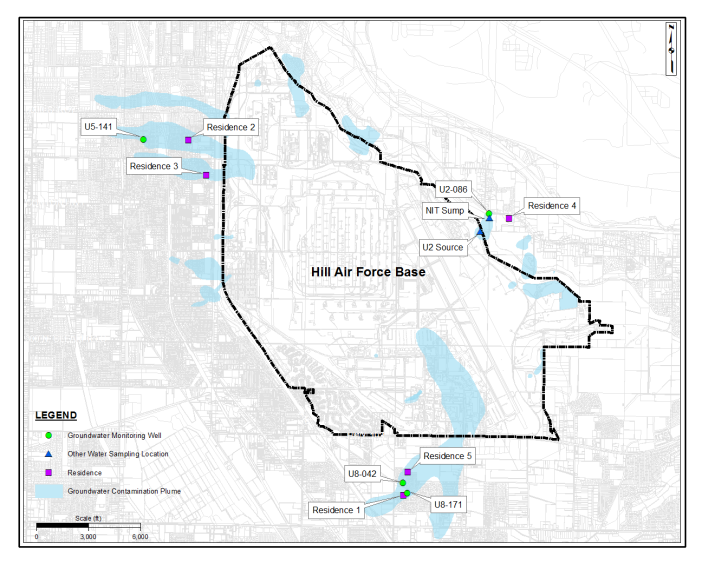
Figure A.2-2. Map of sampling locations.
Source: GSI Environmental, used with permission.
|
Location |
Contaminant Detected in Indoor Air |
Suspected Source |
Types of Samples Collected |
|---|---|---|---|
|
Residence 1 |
TCE |
Vapor intrusion from subsurface |
Indoor air, groundwater |
|
Residence 2 |
PCE |
Indoor source |
Indoor air, groundwater |
|
Residence 3 |
PCE |
Indoor source |
Indoor air, groundwater |
|
Residence 4 |
TCE |
Migration of vapors from sanitary sewer |
Indoor air, sewer headspace, groundwater, |
|
Residence 5 |
TCE |
Vapor intrusion from subsurface |
Indoor air, groundwater, soil gas |
A.2.3 Results
Figure A.2-3 shows the carbon isotopic ratioThe concentration of the heavy isotope divided by the concentration of the light isotope. results for TCE in samples in and around Residence 1 and Figure A.2-4 shows the carbon and chlorine isotopeTwo atoms with the same number of protons but a different number of neutrons. results for TCE and PCE in samples collected in and around Residences 2 through 5.
 (1)/03000003_490x333.png)
Figure A.2-3. Results for δ13C for TCE in Residence 1 indoor air and groundwater samples, and the range for consumer products.
Source: Reprinted with permission from McHugh, T., T. Kuder, S. Fiorenza, K. Gorder, E. Dettenmaier, and P. Philp, 2011, “Application of CSIA to Distinguish Between Vapor Intrusion and Indoor Sources of VOCs,” Environmental Science & Technology, 45: 5952-5958. Copyright 2011 American Chemical Society.
 (1)/03000004_268x307.png)
 (1)/03000005_267x307.png)
 (1)/03000006_264x288.png)
 (1)/03000007_270x290.png)
Figure A.2-4. Results for δ13C and δ37Cl carbon for PCE or TCE in samples at Residences 2 through 5.
Reprinted with permission from McHugh, T., T. Kuder, S. Fiorenza, K. Gorder, E. Dettenmaier, and P. Philp, 2011, “Application of CSIA to Distinguish Between Vapor Intrusion and Indoor Sources of VOCs,” Environmental Science & Technology, 45: 5952-5958. Copyright 2011 American Chemical Society.
The indoor air δ13C and δ37Cl values were compared to soil gas sample values, groundwater sample values from sample locations near each residence, and the range of values for commercial products (dashed boxes in Figure A.2-4) that contain PCE or TCE. In Figure A.2-4, the data include groundwater (open squares), indoor air (black circles), and soil gas (x) results.The results support the following observations:
- Residence 1 (Figure A.2-3): The indoor air δ13C value for TCE was similar to groundwater values for TCE. The indoor air δ13C value was heavier than the range for commercial products. Although δ37Cl was not measured, the δ13C results for TCE in indoor air indicate vapor intrusion as the source. As noted in Table A.2-1, the suspected source of TCE in indoor air, based on the data available prior to the CSIA analyses, was a subsurface source.
- Residence 2 (Figure A.2-4): The indoor air δ37Cl value for PCE and the groundwater δ37Cl value were similar. The indoor air δ13C value was depleted by 60/00 relative to that of the groundwater values. The indoor air δ13C value was within the range measured for commercial products. These results indicated an indoor source of PCE. As noted in Table A.2-1, the suspected source of TCE in indoor air, based on the data available prior to the CSIA analyses, was an indoor source.
- Residence 3 (Figure A.2-4): A PCE-containing glue commonly used for hobby crafts (E6000) was found in the residence. The indoor air δ13C and δ37Cl values for PCE closely matched the E6000 values. In addition, the δ13C and δ37Cl values were lighter than the groundwater δ13C and δ37Cl values. These results are consistent with the source of PCE being E6000 glue in the residence.
- Residence 4 (Figure A.2-4): The indoor air δ13C and δ37Cl values for PCE were similar to those for TCE in the sewer headspace and groundwater. Based on site information, the groundwater appears to discharge to the sewer line. These results were consistent with the sewer line as the primary source of TCE in the residence.
- Residence 5 (Figure A.2-4): The groundwater δ13C and δ37Cl values exhibited a wide range. For soil gas samples, the δ13C values were heavier than the values for the closest groundwater sample. Conversely, the indoor air δ13C values for were lighter than the values for the groundwater samples. A pattern was not evident for the δ37Cl values at Residence 5. The CSIA results did not identify the source of TCE in indoor air, but indicated a contribution from an indoor source.
A.2.4 Conclusions
Results of this study confirm that CSIA can be useful for differentiating vapor intrusion and indoor sources of VOCs.
- For two residences (Residences 1 and 3), the CSIA results alone provided identification of the VOC source.
- At two residences (Residences 2 and 4), the results were consistent with the likely sources identified with information available before the CSIA analyses were conducted.
- At one residence (Residence 5), the CSIA results were inconclusive with respect to the source of TCE in indoor air.
A.2.5 Costs
For CSIA analyses of groundwater and vapor samples the cost for the isotope analyses for carbon is $350 for the first compound and then $50 for each additional compound that may be present. The cost for chlorine CSIA is $400 for the first compound and then $50 for each additional compound. If necessary, adsorbent tubes can be rented for $25 per tube.
A.2.6 Outcomes and Challenges
Regulator response to this study was generally positive. For example, the Guidance for the Evaluation and Mitigation of Subsurface Vapor Intrusion to Indoor Air (California DTSC, 2011) mentions: “The use of stable isotopesForms of an element that do not undergo radioactive decay at a measureable rate. is a developing technique for vapor intrusion that may merit consideration in some situations.”
As discussed in McHugh et al. (2011), the TCE carbon isotopic ratios were affected by the sample handling procedures. Maximum error was estimated and applied as default error bars for the data. In addition, refrigeration of sorbent tubes after collection and shipping samples on ice to maintain a 4°C overnight is recommended.
As part of this study, a lab validation study was performed to evaluate different adsorbents for the sampling tubes to determine which adsorbent would be most appropriate for performing CSIA on vapor samples. The results of the validation study demonstrated that Carboxen 1016 resulted in no fractionation of the compound during sample collection and analysis (McHugh et al. 2011a).
When considering CSIA for the vapor intrusion pathway, a small number of groundwater or soil gas samples located near the buildings of concern should first be evaluated. The isotopic ratios should be measured for the target VOC in the groundwater or soil gas samples. To move forward with a larger-scale investigation, the isotopic ratios measured in these groundwater or soil gas samples should be outside the typical range for commercial products.
A.2.7 References
California Department of Toxic Substances Control (DTSC), 2011. “Guidance for the Evaluation and Mitigation of Subsurface Vapor Intrusion to Indoor Air (Vapor Intrusion Guidance).”
McHugh, T., T. Kuder, S. Fiorenza, K. Gorder, E. Dettenmaier, and P. Philp. 2011. “Application of CSIA to Distinguish Between Vapor Intrusion and Indoor Sources of VOCs.” Environmental Science & Technology 45:5952-5958.
McHugh, T., T. Kuder, M. Klisch, and P. Philp. 2011a. “Laboratory Validation Report, Use of Compound Specific Isotope Analysis to Distinguish Between Vapor Intrusion and Indoor Sources of VOCs.” Prepared for the Department of Defense - Environmental Security Technology Certificate Program (ESTCP), Arlington, Virginia. www.estcp.org
Publication Date: April 2013